

The performance of a metal box depends equally on its structural design and its surface treatment. Take a box welded from Q235 steel: if the surface treatment is inadequate, exposure to a humid environment for just a few months can lead to rusting, cracked welds, and peeling coatings-turning a container originally capable of bearing a 1,500-kilogram load into a pile of scrap metal. Surface treatment is not merely an optional "value-add"; it is a fundamental requirement that determines whether the product can withstand long-term, reliable use by the customer.

The surface treatment process for our metal containers is identical to that used for our roll cages. We operate our own powder coating facility and maintain a stable partnership for hot-dip galvanizing services. This means the entire process-from the initial pretreatment of the workpiece to the final curing stage-is under our direct control; we do not rely on external contractors or face delays caused by third-party scheduling.

Powder coating only works as well as the prep behind it. That's why each part runs through a full pretreatment line before it ever sees the booth: first-stage degreasing, primary degreasing, a rinse, then pickling or abrasive blasting, surface conditioning, phosphate conversion, a deionized rinse, and dry-off. Trained operators keep live tabs on tank temperature, chemical strength, and pH. After prep, the part must pass a water-film continuity check (water-break test). If the film stays intact for at least half a minute, it can move on; if it snaps or pulls back, it doesn't. The powder application booth is kept within set temperature and humidity limits. Hangers and jigs are cleaned on a fixed cycle, and the bake/cure oven profile is monitored throughout. We don't chase a "thick" look by piling on more material. Too much film can weaken adhesion and make the finish brittle. The target is a level, dense film that bonds firmly. Film build targets: 70–90 μm on flat sections; 60 μm or more at edges and corners; 50 μm or more in recesses and at welds; and a 120 μm overall cap. Each lot is checked with a calibration-verified gauge at several points, and readings for flat areas, edges/corners, and recesses are logged.
For products that will stay outdoors for years, we suggest hot-dip galvanization. The process forms a zinc-iron alloy layer that is metallurgically integrated with the steel, so it grips exceptionally well. The zinc also provides sacrificial-anode action: a scratch may cut through the surface, but the surrounding zinc keeps protecting the steel beneath. Our hot-dip galvanized metal containers go past 480 hours of salt-spray exposure without red corrosion. They are built for open-air storage yards, harbor wharves, and partially covered loading bays. You can review full specifications for our galvanized steel boxes at https://www.plasticpalletssales.com/steel-pallet-box/ . The model is 1270×1053×760 mm, rated to 1500 kg, and uses a reinforced U-shaped channel-steel underframe. Forklifts and hand pallet trucks can approach it from any side. This version is hot-dip galvanized, so it keeps rust away in long-term outdoor and wet service.

For buyers who need corrosion protection plus a clean appearance, we offer a dual-layer coating system: hot-dip galvanization as the base, powder coating as the top. The galvanized base delivers electrochemical protection. The powder topcoat creates a barrier layer and improves the look. Together, they outlast either coating used alone. In aggressive environments, this dual-layer system commonly lasts 50–100% longer than hot-dip galvanizing by itself and 200–400% longer than powder coating by itself. It costs more, but for high-quality products designed for true long-term outdoor use, that extra cost is justified.

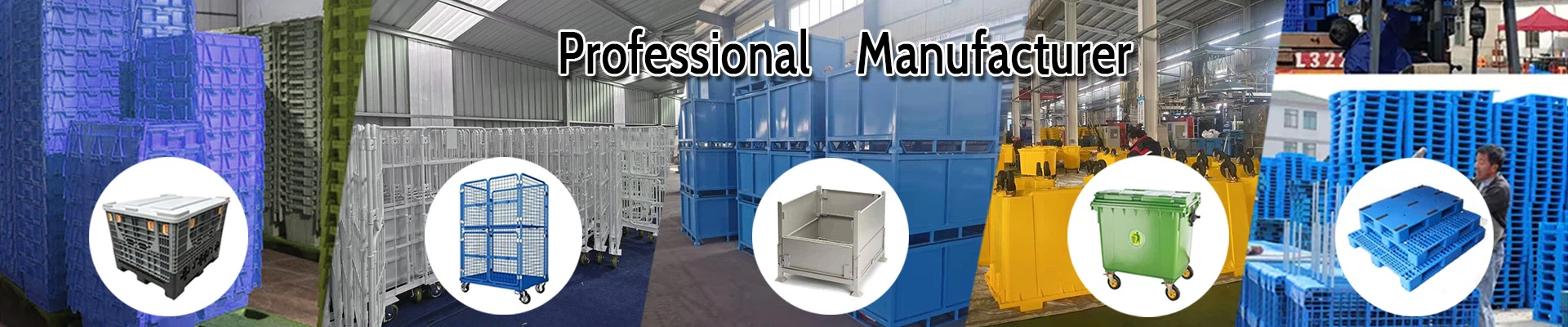
We welcome customers to visit our factory at any time to inspect our pre-treatment lines, spray booths, curing ovens, and testing equipment; you are also welcome to randomly select finished products for on-site testing. High-quality powder coating and hot-dip galvanizing aren't just about words-they are the result of excellence in every step of the production process. If you are unsure which surface treatment to choose, simply tell us about your operating environment, and we will help you decide. Please visit https://www.plasticpalletssales.com/steel-pallet-box/ to see our processes in action.


