Before we talk about leak proof trays, let's first talk about a reality: no matter which country you are in, if you deal with chemicals, oil products, or hazardous waste, you should feel that environmental and safety inspections have become increasingly strict in the past year or two.
In the past, placing a few pallets in the warehouse and being able to catch any leaks at the bottom was considered 'conscious'. It's not possible now. Many places have included 'whether there are compliant leak prevention measures' as a mandatory inspection item. That is to say, if you are not qualified, or if you are qualified but do not meet the standards, you will be fined for minor rectification, and in severe cases, production will be suspended.
Especially in 2026, several major markets' new regulations have entered the implementation period. For example, some regions explicitly require that the leakage rate of sealing points must be controlled below 0.5 ‰; The dynamic sealing point cannot exceed 0.2%. There are also more detailed regulations on static grounding and safety interlocking for IBC drums (which are square and large ton drums).
Translated into human language: Leak proof trays have changed from "optional" to "mandatory". It's almost impossible to get away with it by relying on 'doing it this way before'.
2, The market is not large, but it has been rising
The leak proof tray industry may seem unremarkable, but the data is there - the global annual growth rate is stable at around 6%. Don't underestimate this number, it is considered very solid in industrial supporting products.
The caliber of several research institutions is similar: the global market is expected to be between 1 billion and 1.2 billion US dollars by 2026, and can reach over 1.4 billion US dollars by around 2035. The main demand still comes from the industrial sector, accounting for over 40%.
Interestingly, there have been regional changes. Previously, North America and Europe accounted for the majority, but now the Asia Pacific region is catching up particularly quickly, with the highest growth rate in the world. The reason is not complicated - factories here are still rising, environmental regulations are tightening, and the demand for leak proof trays has naturally increased due to the squeeze on both ends.
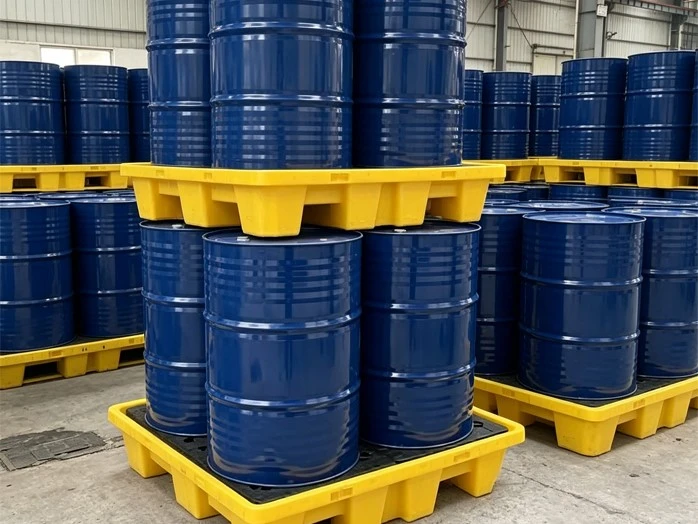
Specifically regarding the product, the four barrel pallet sells the most, accounting for approximately 30%. In terms of material, plastic trays (such as polypropylene or high-density polyethylene) account for half of the market share because they are lightweight, corrosion-resistant, and reasonably priced. Stainless steel is also available, but it is generally used in extreme scenarios where strong acids and bases are present.
3, How to choose a tray? Don't just look at the price
Many buyers ask 'how much does it cost per item' at the beginning, which is actually the easiest way to fall into a trap. Choose a leak proof tray and suggest going through the following angles:
Firstly, is there a compliance document. It's not about having to look at any red headed documents, but whether the manufacturer can provide third-party testing reports and certification certificates. If you buy it back and can't get anything out during the inspection, it's like not buying it at all.
Secondly, the material and workmanship. It is necessary to clarify whether the plastic tray is made of modified materials and whether recycled materials have been added (some high-end products may use about 30% recycled materials, which is not a problem, but it should be clearly stated). Whether there are burrs on the corners and whether the load-bearing beam will deform, these details can be known at a glance.
Thirdly, can you catch what you want to pick up. It sounds like nonsense, but there is really a wrong purchase. The trays for storing engine oil and strong acid have different corrosion resistance levels. If unsure, choose one with strong universality or directly ask the manufacturer for a chemical resistance table.
Fourthly, whether it is effective or not. Is the forklift hole widened? Is there any anti slip pattern on the bottom? Is it stable when stacking? These are directly related to the efficiency and safety of daily cargo handling. According to data, widening forklift slots can improve loading and unloading efficiency by about 30%, which is not a small amount.
Fifth, long-term costs. Some manufacturers now offer leasing or subscription services, covering nearly 20% of maintenance needs. If you don't want to invest too much money at once, you can ask this option.
4, The smart tray has arrived, but don't rush to catch up with the new one

There has been a trend in the past two years - "smart trays" with sensors. Several probes are installed at the bottom of the tray, which can measure pH value, conductivity, and volatile gases. Once there is a leak, not only can it sound an alarm, but it can also be linked to turn off the exhaust and start adsorption.
It sounds cool, but based on actual feedback, large enterprises use it more (about a quarter), and small and medium-sized warehouses are actually not that urgent. Because this thing is expensive and requires a supporting system to receive data. If you don't even have a basic warehouse management system, buying a few smart pallets is not very meaningful.
A more practical choice is to first equip and make good use of the basic compliance trays, and then consider gradually upgrading once the operation is on track.
5, Summary sentence
2026 is a small turning point for leak proof trays. Regulations are being pushed, the market is growing, and products are also iterating. But for most warehouse managers, the core has not changed - don't let the leakage fall to the ground, don't wait for the accident to come before remedying it.
Choosing the right tray, placing it in the right place, and conducting regular inspections - these three things are more effective than any fancy concept.