



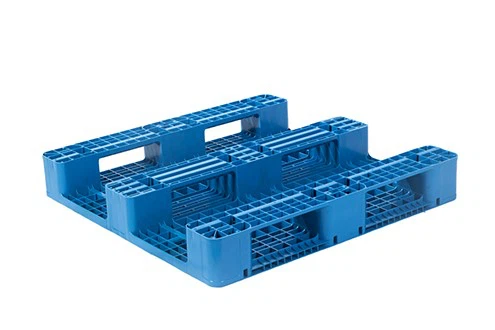
A three runners pallet is a plastic board with three vertical beams at the bottom. It's mainly used for placing goods, making it easy for forklifts to handle, and is widely used in warehouses.
This type of pallet is sturdy and durable, resistant to water and moisture. It's cleaner than wooden pallets and less likely to get damaged. Thanks to its three-runner structure at the bottom, forklifts can operate from all directions, making it flexible to use. It's convenient for stacking goods and can be folded to save space, so it's favored by many factories and logistics points.

01
Design & Weight Capacity
Rackable pallets have reinforced structures, often with built-in steel tubes or extra supports under the fork pockets. They're built to carry heavy loads on warehouse shelves (e.g., 800kg–1.5 tons). Non-rackable pallets are simpler and weaker – they're only safe for stacking on the floor or light transport (shelf load ≤300kg). Putting them on racks risks cracking or collapse.
02
Safety Testing
Rackable pallets pass strict safety tests (like ISO 8611) to prove they won't bend or break when loaded on shelves long-term. Some even have special certifications (UR label). Non-rackable pallets aren't tested for shelf use – they're riskier and could damage racks or cause accidents if used incorrectly.
03
Usage & Cost
Rackable pallets work in high-bay warehouses and automated systems, saving space vertically. They cost more (20-40% extra) but are essential for efficient storage. Non-rackable pallets are cheaper and suit floor stacking or light goods but can't be used on racks. Choosing the wrong type may lead to higher costs from replacements or accidents.
What is the difference between new plastic pallets and ordinary plastic pallets?
Different sources and purity of raw materials
The biggest difference is in the raw materials. Virgin plastic pallets are made from brand-new, unused plastic, straight from oil refining – think of it like pure, freshly mined ore. Regular plastic pallets, however, rely heavily on recycled plastic. This means they're made by melting down old plastic items like used bottles or packaging. Since this recycled plastic comes from various sources, it can be a mix of different types and might even contain tiny bits of impurities, making it less pure and consistent than virgin plastic.

Different performance and durability
Because of that pure starting material, virgin plastic pallets are generally tougher and stronger. They can carry heavier loads without bending or cracking as easily. They also handle bumps and drops better, being less likely to shatter, especially when it's cold outside (recycled plastic can get brittle in freezing temperatures). Plus, virgin plastic pallets look better too – they have more even, vibrant colors and appear cleaner and newer. Simply put, they last a lot longer and can serve you well for many years.

Different cost and environmental considerations
Naturally, virgin plastic pallets cost more upfront because the raw materials are pricier. The main appeal of regular plastic pallets is their lower price tag – they're cheaper to buy. But here's the catch: because they might be a bit weaker and could age faster, regular pallets might break sooner and need replacing more often. Looking at the environment, regular pallets do a good job by reusing old plastic waste, keeping it out of landfills. Virgin plastic, while very durable, uses up new petroleum resources and the manufacturing process might use a bit more energy and create more emissions compared to recycling.
What are the categories of three runner plastic pallets?
| By Size | Common sizes include 1200*1000, 1200*800, 1000*800, 1440*1150, 1400*1200, 1300*1100, 1250*1000, 1200*1200, 1200*1100, 1100*1100, 1400*1100, 1300*1200, 1100*800, and 1000*1000 (units in mm). Custom sizes are available to fit specific needs. |
| By Pallet Type | Options are mesh pallets (with grid patterns) or flat pallets. Flat pallets can add raised edges, anti-slip strips, or pads upon request for extra safety. |
| By Molding Method | Choices include one-time injection-molded pallets, pallets with built-in steel pipes, flat assembled pallets, or mesh assembled pallets, depending on durability needs. |
| By Weight Capacity | Light-duty and heavy-duty pallets are designed for different environments, from light storage to industrial use. |
| By Rack Compatibility | Some pallets are rackable (suitable for shelving), while others are non-rackable, depending on their structure and strength. |
| By Material | Made from either 100% virgin plastic (premium quality) or standard recycled plastic, balancing cost and durability. |
| By Color | Blue is the most common, but custom colors can be ordered to help categorize goods or match workplace requirements. |
What are the differences between grid plastic pallets and flat plastic pallets?

1
Structural Design Differences
Mesh pallets have holes across the surface like a sieve, letting air pass and dust fall through. Solid plastic pallets are fully sealed with a smooth surface, like a solid board. The mesh design makes them lighter (about 30% less weight), while solid pallets better protect small items from slipping out.
2
Usage Scenarios Comparison
Mesh pallets work best in damp or ventilated places (like cold storage or produce warehouses) – holes drain water and allow airflow to prevent rot. Solid pallets suit delicate instruments, small parts, or powdered goods; their flat surface stops items from getting stuck and makes cleaning easier.
3
Load Capacity & Durability
Due to hollow spaces, mesh pallets may crack around holes under heavy long-term loads – better for medium/light goods. Solid pallets handle weight evenly, resist crushing better, and won't snap easily during forklift moves. However, mesh pallets grip better (holes add friction), while solid surfaces can get slippery when wet.
How to choose the right three runner pallet for your company?
Match Size to Your Goods & Equipment
Measure your typical loads (boxes, bags, machinery) and storage racks first. The pallet must fully support items without overhang. Crucially, check your forklift or pallet jack dimensions: runners need enough clearance for forks to slide in smoothly. Standard sizes like 1200x1000mm work for many, but custom fits prevent operational headaches.
Weight Matters – Both Load and Pallet
Calculate your heaviest regular load – then add a 25% safety buffer. Three-runner pallets handle ~1,000-1,500kg typically. Don't forget the pallet's own weight: lighter pallets (e.g., 15kg vs 25kg) save shipping costs and ease manual handling, but ensure they still meet your strength needs.
Consider Your Work Environment
Will pallets face moisture, chemicals, or freezing temps? For cold storage or outdoor use, pick UV-stabilized, frost-resistant plastic. In cleanrooms or food plants, choose non-porous, washable designs. Rough handling? Reinforced runner edges resist cracking. Smooth factory floors? Add anti-slip pads for stability.
Balance Cost with Long-Term Value
Cheaper pallets may warp under heavy use, costing more in replacements. For daily warehouse use, invest in durable new-material pallets – they last years. If shipping externally (and may lose pallets), recycled-plastic options cut losses. Also check if stacking/nesting designs save storage space.
Hot Tags: 3 runners plastic pallets, China, suppliers, manufacturers, factory, wholesale, price
