


As a supplier of plastic pallet boxes, I get asked this question all the time: "Are these boxes smooth on the outside and inside?" And it's a fair question – because in real-world use, surface finish isn't just about looks; it affects cleaning, handling, product protection, and even safety. So let's walk through the details together, without any jargon, and see what really matters.
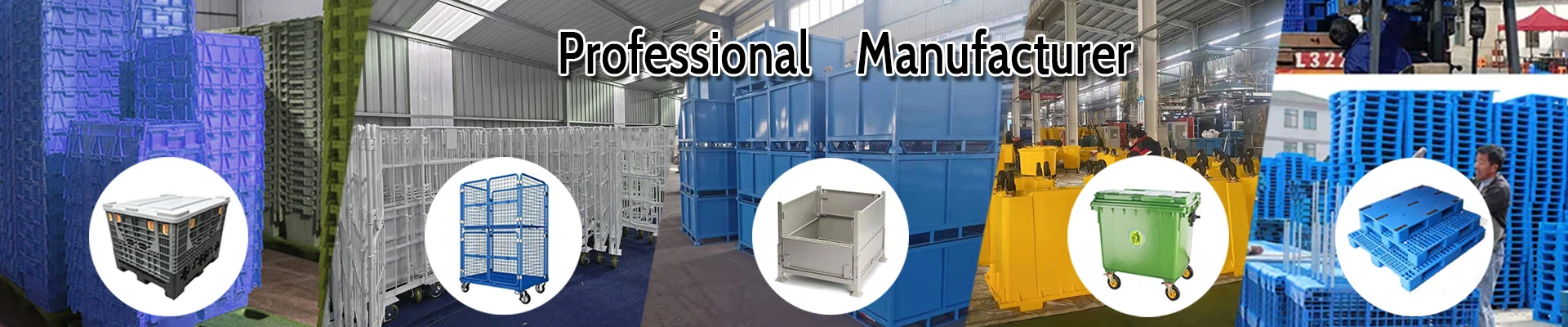
We offer several types – large grid‑style boxes, heavy‑duty Storage bins, and collapsible high‑capacity containers – and each one serves a different purpose. The surface smoothness depends mainly on two things: how the box is made, and what it's meant to carry.
For example, if you're storing delicate components or finished goods that scratch easily, you'll want a very smooth interior surface to avoid any rubbing damage. But if the box is going to be used on a rough construction site or in a wet factory, a slightly textured exterior can actually be a plus – it gives workers a better grip and stands up to more abuse.

How the manufacturing process shapes the surface
Almost all these boxes are made by injection moulding – that's where molten plastic is forced into a steel mould under high pressure. The quality of that mould is crucial. A well‑polished mould cavity will give you a glass‑like finish, while a mould with a matte or etched texture will produce a rougher surface.
But it's not just the mould. The machine settings – injection speed, melt temperature, and cooling time – also play a big part. If any of these are off, you can get uneven spots, sink marks, or rough patches. That's why we constantly monitor these parameters on our production line, because even small fluctuations can ruin the finish.
Why smooth surfaces are often the first choice
Smooth‑finished boxes have some clear practical benefits.
Cleaning is a breeze
Dust, grease, and food residue don't cling to smooth plastic the way they do to rough textures. In food processing or pharmaceutical warehouses, this is a huge plus – you can wipe them down quickly, and they don't harbour bacteria.
Less friction, less wear
When you slide boxes across rollers or stack them manually, smooth surfaces generate less drag. That means less effort for workers and less scuffing on the boxes themselves.
Stacking stability
Smooth, flat surfaces let boxes nest or stack evenly, without tilting or slipping – especially important when you have tall pallet loads.
Protection for sensitive goods
In electronics assembly, for instance, rough plastic can generate static charges that damage microchips. A smooth surface reduces that risk significantly.
But there are times when a rougher finish is better
Don't get me wrong – texture isn't always a drawback. In certain situations, it's exactly what you need.
Wet or oily environments
A textured exterior gives your hands (or gloves) something to grip, so the box won't slip out of your grasp. That's a real safety factor.
Heavy or oddly shaped loads
If you're shipping metal castings or machine parts, a slightly roughened interior surface helps keep them from sliding around during transit. It's like built‑in friction that stabilises the load.
So there's no single "best" surface – it all depends on your working conditions and what you put inside.
We don't believe in one‑size‑fits‑all. That's why we design each model with its own surface character.
Our large grid‑style boxes have a smooth inner shell – perfect for small parts or fragile items – while the outer grid pattern provides ventilation and lets you see the contents at a glance.
Our heavy‑duty storage bins are built for tough workshops. The outside has a light texture for a secure handhold, but we keep the inside smooth so you can still clean it easily.
Our collapsible high‑capacity containers are all about space efficiency. We make sure their surfaces are smooth enough that folding and unfolding works without sticking or jamming – even after hundreds of cycles.


How we make sure every box meets the standard
Quality control isn't just a buzzword for us – it's a daily routine. Every batch goes through a checklist that covers surface smoothness (we measure it with both visual and tactile checks), but also wall thickness, corner strength, and dimensional accuracy. We want to catch any defect before it leaves the factory, so our customers get exactly what they expect.
Let's talk about your specific needs
If you're reading this and thinking about your own operations – maybe you handle food, or electronics, or heavy machinery – we'd love to hear what you're dealing with. Tell us about your products, your handling methods, and your storage environment. We'll recommend a box with the right surface finish, whether that's mirror‑smooth, lightly textured, or something in between.
And we don't just sell boxes – we help you solve problems. Our team is happy to answer any questions, send samples, or even run small trials. Just reach out – we're here to make sure you get durable, practical pallet boxes at a fair price, with no hidden surprises.


