

1. Core Idea: What Happens When an AS/RS Meets AGVs?
The AS/RS is the tall "building" itself, with rows of neat "guest rooms" (storage locations). The hardworking but silent "elevator attendant" who goes up and down, precisely storing or retrieving luggage (goods) from the rooms, is the stacker crane.
The AGVs, on the other hand, are the smart "bellboy robots" in the hotel lobby. They don't handle the upper floors, but they're masters of ground logistics. Once the "elevator attendant" brings the luggage (goods) down to the front desk, these "bellboys" take over, flexibly transporting it to the designated "suite" (like a sorting station or production line).
So, in a nutshell: The AS/RS solves the problem of "how to store and retrieve goods in high density," while the AGVs solve the problem of "how to move goods flexibly across the warehouse floor." When these two join forces, they create a seamless, automated pipeline from the "shelf" to the "workstation."

B.The AS/RS: It's More Than Just Taller Racking
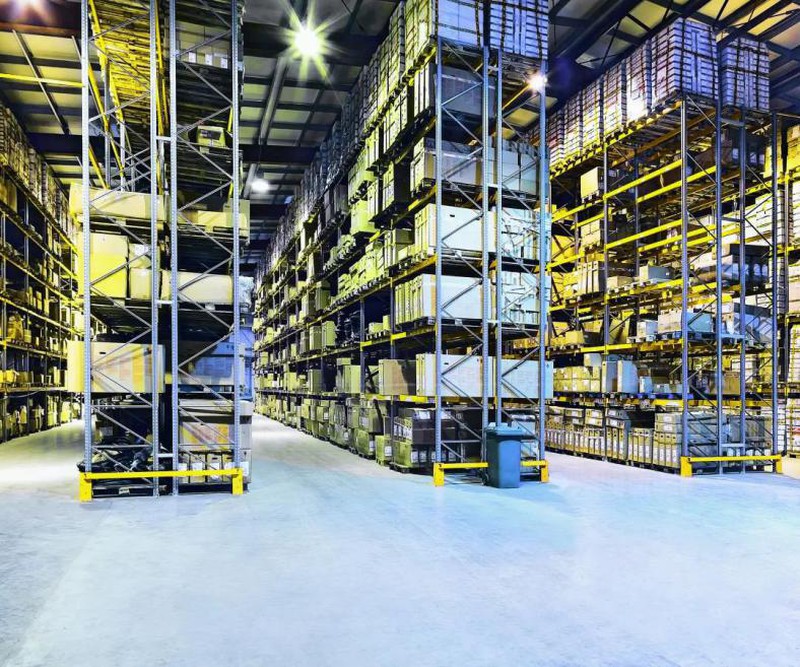
Calling an AS/RS just a tall rack? That's selling it short. It's essentially a "storage robot" that integrates structure, machinery, and smart software.
It's fundamentally different from the flat, single-level warehouses we usually see. In those, you need wide aisles for people and forklifts, which wastes a lot of space. An AS/RS builds upwards, like a giant, precise "vending machine." Its key parts include:
The High-Rise Rack System:
This is its skeleton, making the most of the building's vertical space.
The Core Performer – The Stacker Crane:
Imagine this as a super-precise "mechanical arm" running on fixed tracks. It zooms along narrow aisles, going up, down, and extending to store and retrieve items automatically.
The Smart Brain – The Management System:
Hardware isn't enough; it needs a clever "brain" (the Warehouse Management Software - WMS). This brain remembers which "room" every item is in and efficiently directs the stacker crane's work.

C. AGVs: No Longer 'Dumb' Carts That Just Follow a Line
Older AGVs might have just followed magnetic tape on the floor. But today's AGVs are much smarter; they're more like independent-minded "movers."
They "See" Their Path:
They can navigate on their own by scanning their surroundings (laser mapping), reading QR codes on the floor, or using advanced vision systems like a robot would.
They're "Flexible":
If the warehouse layout changes, you don't need to re-tape the floor. Just update the digital map on a computer, and they adapt to the new routes. They're very versatile.
They "Manage Themselves":
They'll go charge themselves when low on battery, cleverly detour around obstacles, and work tirelessly 24/7.

2. System Synergy: How Do They Work Together?
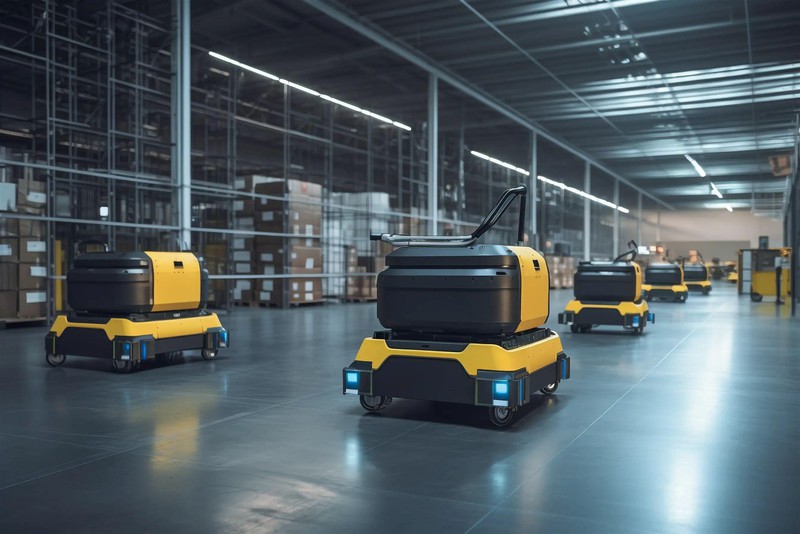
The essence of the system lies in the seamless integration of "vertical access" and "horizontal transport." A helpful analogy is to view the AS/RS as a tall "automated apartment building," the stacker cranes as the "high-speed elevators," and the AGVs as the "tireless couriers" operating on the ground floor.
A standard "outbound" workflow illustrates this synergy
Order Dispatch
The WMS receives an order and sends a command to the AGV control system: "Transport Pallet A from the AS/RS output station to Packing Station 1."
Automated Retrieval
The stacker crane retrieves Pallet A from its high-level location and delivers it to a designated output station at ground level.
AGV Docking & Transfer
An available AGV navigates to the output station, takes possession of Pallet A using its fork, lift, or roller mechanism.
Intelligent Transport
The AGV follows the system's optimized route to carry Pallet A smoothly to Packing Station 1.
Automatic Hand-off
At the packing station, the AGV precisely unloads the pallet for manual handling or transfers it to another automated system.
Task Completion
The AGV reports the task as complete and proceeds to its next assignment or a charging station, forming an efficient, closed-loop process.
3. Common AGV Types for AS/RS (An Equipment Selection Guide)
Different AGVs are suited for various handling tasks. Primary types include:

1
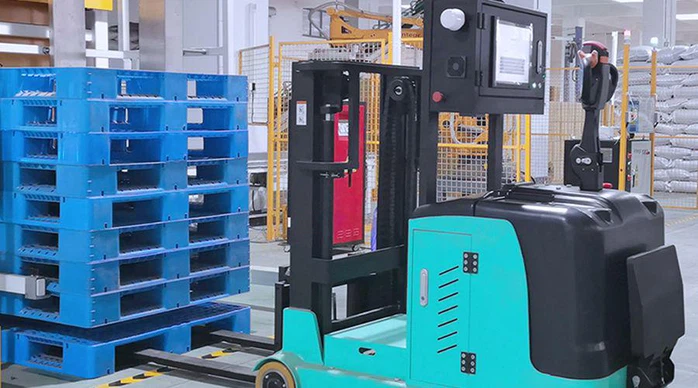
Forklift AGVs
Mimic the function of traditional forklifts, capable of lifting, transporting, and stacking standard pallets. They offer wide applicability.
2
Underride AGVs (Pallet Trucks)
These units slide underneath racks or carts and use a lift mechanism to raise and transport the load. Ideal for working with mobile carts.
3
Roller AGVs
Equipped with powered rollers, they interface seamlessly with roller conveyor lines, enabling automatic transfer of goods onto and off the vehicle.
4
Lift-Table AGVs
Feature a scissor-lift platform that can adjust height to interface with workstations or equipment of varying levels.
4. Why It Makes Business Sense: The Key Benefits of Combining AS/RS with AGVs
Bringing together an Automated Storage and Retrieval System (AS/RS) with AGVs isn't just a tech upgrade-it's a strategic move that delivers real, tangible advantages. Here's what you gain when you deploy this integrated system:
Seamless End-to-End Automation
This setup closes the traditional gap between high-density storage and flexible floor movement. By linking the vertical reach of the AS/RS with the horizontal agility of AGVs, you create a continuous automated workflow-laying the foundation for a fully unmanned, "lights-out" warehouse operation.
Greater Flexibility and Easy Scalability
As your business grows or workflows shift, you won't be held back by rigid infrastructure. Adjusting to new layouts or processes is as simple as updating the AGVs' digital map-no costly construction or disruptive reinstalling of fixed equipment like conveyors. This makes your logistics setup future-proof and protects your long-term investment.

Higher Efficiency and Fewer Errors
The system runs around the clock without getting tired. By removing human factors like fatigue or distraction, you drastically cut down on operational mistakes, delays, and product damage. The result is reliable, consistent output and higher overall throughput.
Better Use of Space and People
AGVs work comfortably in tighter spaces than traditional forklifts, which means narrower aisles and more storage capacity. At the same time, your staff are freed from repetitive, low-value transport tasks-enabling them to take on more meaningful roles in supervision, maintenance, or process improvement.
With robots handling the heavy and repetitive lifting, human interaction with machinery is minimized. This leads to fewer workplace accidents and creates a more organized, modern, and safe environment for everyone.
5. Bringing It All Together: A Starter Guide for Decision-Makers
When AGVs join forces with an Automated Storage and Retrieval System, they form the heart of a smart modern warehouse-acting as both the "link" and the "doer." This partnership brings together the sky-high storage capacity of the AS/RS and the smart, flexible movement of AGVs, making it possible to run a fully automated, intelligent logistics operation-from the moment goods arrive until they're shipped out.
If you're exploring whether this system is right for your organization, here's a simple five-step framework to help you get started:
Begin by getting clear on the basics: what kinds of products you handle, your average and peak daily volumes, how quickly you need to move goods, and what level of accuracy you're aiming for.
Take a close look at how things are done today. Map out your existing warehouse processes to spot where automation could make the biggest difference-then design new, connected material flows that bring storage and movement together.
Match the technology to your load types-whether you mostly use pallets, totes, or other containers-and take stock of your facility's layout. This will help determine what kind of AGVs and what scale of AS/RS will work best for you.
D. Plan for Smooth System Integration
The real magic happens when all the systems talk to each other. Make sure your Warehouse Management System (WMS), Warehouse Control System (WCS), and AGV fleet management software can integrate seamlessly-this is the technical cornerstone of a successful implementation.
Look beyond the initial price tag. Weigh the upfront and setup costs against the long-term gains: higher productivity, reduced labor costs, fewer errors, and smarter space usage. A clear ROI picture will help turn a tech idea into a sound business decision.
This overview offers a practical starting point for understanding how AS/RS and AGVs work together-giving you a solid foundation to move forward with deeper research and confident, well-informed choices.


